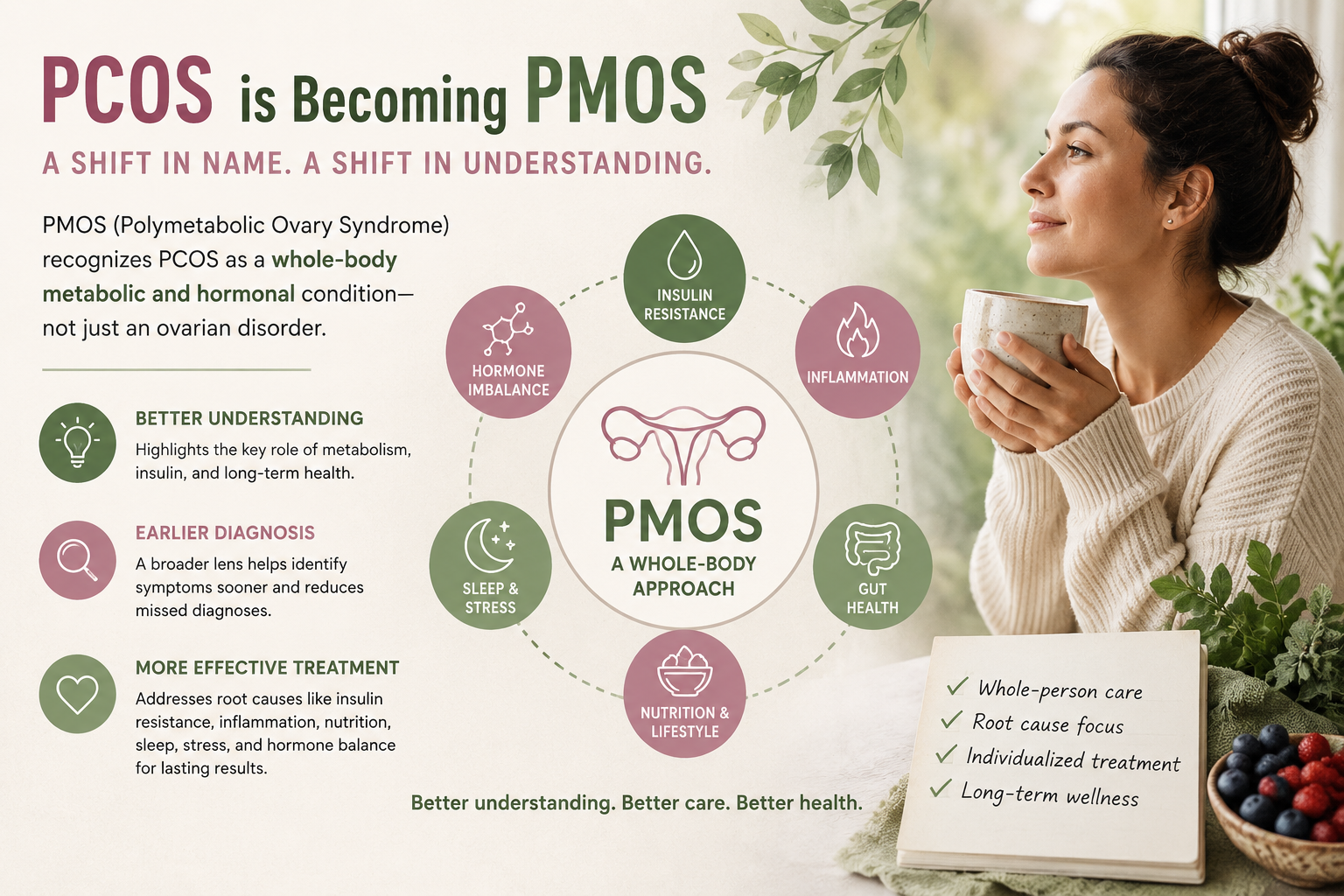
For years, Polycystic Ovary Syndrome (PCOS) has been one of the most commonly diagnosed hormonal conditions affecting women. However, it has become increasingly known that the name “PCOS” doesn’t accurately describe the condition for many patients.
A growing movement within women’s health is advocating for a new name: PMOS (Polymetabolic Ovary Syndrome).
Why Change the Name?
The term polycystic ovary syndrome places the focus on ovarian cysts, yet many women diagnosed with PCOS do not have ovarian cysts at all. More importantly, the condition extends far beyond the ovaries.
PCOS is often associated with:
- Insulin resistance
- Blood sugar dysregulation
- Weight management challenges
- Elevated cholesterol and cardiovascular risk
- Fertility concerns
- Irregular menstrual cycles
- Acne and excess hair growth
- Increased long-term metabolic health risks
The proposed term Polymetabolic Ovary Syndrome (PMOS) better reflects the fact that this is a whole-body metabolic and hormonal condition, not simply an ovarian disorder.
How Does This Help Patients?
A more accurate name can improve understanding, diagnosis, and treatment.
Better Understanding
Patients often assume the condition is only related to ovarian cysts or fertility. PMOS highlights the important role of metabolism, insulin sensitivity, and long-term health.
Earlier Diagnosis
Many women experience symptoms for years before receiving a diagnosis because they don’t fit the “classic” PCOS picture. A broader understanding may help healthcare providers identify affected individuals sooner.
More Effective Treatment
The name PMOS encourages a treatment approach that addresses the root drivers of the condition, including insulin resistance, inflammation, nutrition, sleep, stress, physical activity, and hormonal balance—not just symptom management.
What Does This Mean for Treatment?
Regardless of what the condition is called, the goal remains the same: identify the factors contributing to hormone imbalance and create an individualized treatment plan.
For many patients, this may include:
- Nutrition and lifestyle strategies
- Exercise tailored to metabolic health
- Support for insulin sensitivity
- Targeted nutritional supplementation
- Fertility optimization when appropriate
- Management of cardiovascular and metabolic risk factors
A naturopathic perspective on PCOS has long recognized that this condition involves much more than just the ovaries. Naturopathic medicine takes a whole-person approach, looking at factors such as insulin resistance, inflammation, stress, nutrition, sleep, gut health, and hormone balance. In many ways, the shift toward PMOS reflects what naturopathic practitioners have understood for years: effective treatment requires addressing the broader metabolic and lifestyle factors that contribute to the condition.
The Bottom Line
While the name change from PCOS to PMOS may take some time to be fully adopted within the medical community and beyond, it reflects an important shift in how we understand this condition. By recognizing the metabolic roots of the disorder, patients and practitioners can focus on more comprehensive, effective care that supports both hormonal and long-term health.