Author: Dr. Ryan Nakama ND

  • Naturopathic Approach to Menstrual Cycle Issues: Irregular Periods, Heavy Bleeding, PMS & PCOS

    Naturopathic Approach to Menstrual Cycle Issues: Irregular Periods, Heavy Bleeding, PMS & PCOS

    Menstrual cycle concerns are incredibly common—but they are not something you simply have to “put up with.” Symptoms like irregular periods, painful cramps, heavy bleeding, mood swings, acne, or missing cycles often signal underlying imbalances that can be improved with the right support.

    A naturopathic approach to Women’s Health looks beyond symptom suppression to understand why your cycle is out of balance. By addressing hormones, stress, nutrition, digestion, inflammation, and metabolic health, many women can experience healthier, more predictable cycles and improved overall wellbeing.


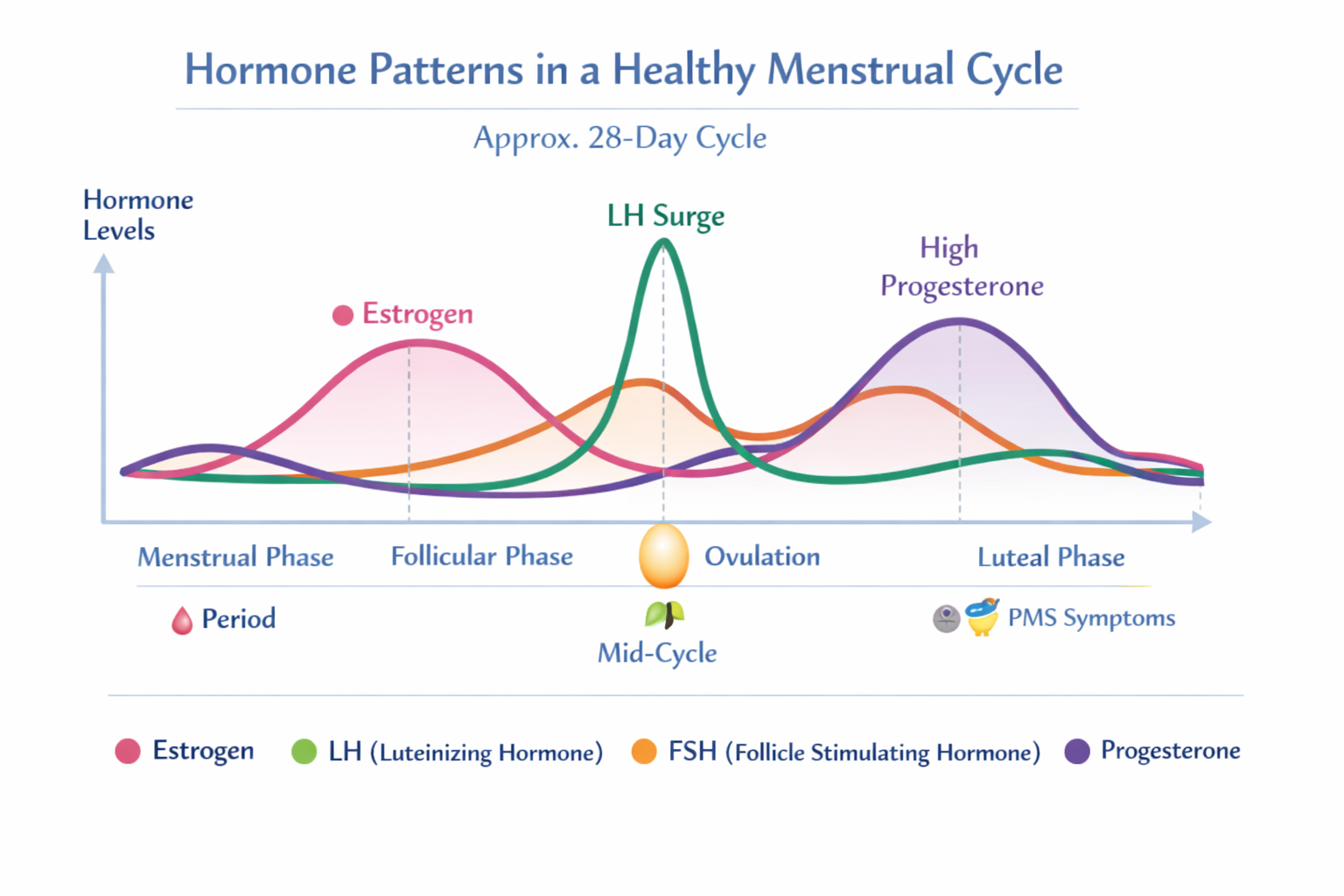
    Understanding the Menstrual Cycle

    A healthy menstrual cycle is often a reflection of overall health. While cycle length can vary, a typical cycle is around 24–35 days, with bleeding lasting 3–7 days.

    When cycles become irregular, very painful, unusually heavy, or accompanied by other symptoms, it may suggest hormonal or physiological imbalances that deserve attention.
    Common menstrual concerns include:

    • Irregular or unpredictable periods
    • Missing periods
    • Heavy bleeding or clotting
    • Painful cramps
    • PMS / PMDD symptoms
    • Acne and hormonal breakouts
    • Mood changes or irritability
    • PCOS symptoms
    • Fertility concerns
    • Perimenopausal cycle changes

    Common Menstrual Cycle Issues & Naturopathic Insights

    1. Irregular Cycles

    Irregular cycles may involve long gaps between periods, short cycles, unpredictable bleeding, or skipped periods.

    Possible Root Causes:

    • Stress and cortisol imbalance
    • Thyroid dysfunction
    • Polycystic Ovary Syndrome (PCOS)
    • Under-fueling or excessive exercise
    • Insulin resistance
    • Perimenopause
    • Nutrient deficiencies

    Naturopathic Support May Include:

    • Stress regulation strategies
    • Blood sugar balancing nutrition
    • Thyroid assessment
    • Sleep optimization
    • Targeted nutrients such as magnesium, zinc, B vitamins
    • Herbal support depending on the pattern

    2. Heavy Bleeding

    Heavy periods are common but should not be ignored—especially if causing fatigue, iron deficiency, or interfering with daily life.

    Possible Contributors:

    • Estrogen dominance
    • Fibroids or polyps
    • Progesterone insufficiency
    • Thyroid dysfunction
    • Inflammation
    • Perimenopause

    Naturopathic Support May Include:

    • Iron and ferritin assessment
    • Anti-inflammatory nutrition strategies
    • Hormone metabolism support
    • Liver support
    • Targeted nutrients and herbal medicine
    • Collaboration for pelvic ultrasound or gynecology referral when needed

    4

    3. PMS (Premenstrual Syndrome)

    Symptoms such as irritability, anxiety, bloating, breast tenderness, headaches, cravings, and fatigue before your period often reflect hormone sensitivity or imbalance.

    Common Drivers:

    • Low progesterone
    • Estrogen imbalance
    • Blood sugar instability
    • Stress hormone dysregulation
    • Poor sleep
    • Magnesium deficiency
    • Inflammation

    Naturopathic Treatment May Include:

    • Vitamin and mineral support
    • Blood sugar balancing meals
    • Nervous system regulation
    • Exercise and movement plans
    • Herbal support
    • Sleep improvement strategies

    4. PCOS (Polycystic Ovary Syndrome)

    Polycystic Ovary Syndrome is one of the most common causes of irregular cycles and may also present with acne, hair growth changes, difficulty losing weight, insulin resistance, or fertility concerns.

    Naturopathic Focus Areas:

    • Improving insulin sensitivity
    • Supporting regular ovulation
    • Reducing inflammation
    • Stress reduction
    • Weight-neutral metabolic support
    • Nutrient optimization
    • Evidence-informed supplementation and herbal medicine

    What Testing May Be Recommended?

    A naturopathic doctor may recommend or review testing such as:

    • Thyroid panel (TSH, Free T3, Free T4)
    • Iron studies / ferritin
    • Vitamin D
    • Blood sugar markers (fasting glucose, insulin, HbA1c)
    • Sex hormones (timing dependent)
    • Pelvic ultrasound when appropriate
    • Inflammation markers

    Testing is individualized and based on symptoms, history, and goals.


    Lifestyle Foundations for Better Cycles

    Even small changes can make a major difference:

    Nutrition

    Nutrition can support hormone metabolism, inflammation status, blood sugars, iron status, and more.

    Stress Management

    Chronic stress can disrupt ovulation and worsen PMS.

    Sleep

    Aim for consistent sleep timing and adequate duration.


    When to Seek Support

    You should seek professional assessment if you experience:

    • Missing periods
    • Very heavy bleeding
    • Severe pain
    • Cycles shorter than 24 days or longer than 35 days regularly
    • Fertility concerns
    • New cycle changes after age 40
    • Fatigue or anemia symptoms
    • Worsening PMS or mood symptoms

    How a Naturopathic Doctor Can Help

    A naturopathic doctor can help identify root causes, order appropriate lab testing, and create a personalized plan that may include:

    • Nutrition counselling
    • Supplement recommendations
    • Herbal medicine
    • Hormone support strategies
    • Stress and sleep optimization
    • Coordination with conventional care when needed

    Ready to Improve Your Cycle Naturally?

    If you’re dealing with irregular periods, heavy bleeding, PMS, or PCOS, your body is giving important signals. With the right investigation and support, cycles often improve significantly.

    A personalized naturopathic plan can help you feel more balanced, energized, and in control of your health again.


  • Professional Burnout: A Naturopathic Approach to Restoring Resilience

    Professional Burnout: A Naturopathic Approach to Restoring Resilience

    In today’s fast-paced, high-demand world, burnout has become almost synonymous with professional success. Long hours, constant pressure, and the expectation to always perform at your best can slowly erode your physical, mental, and emotional reserves.

    But burnout isn’t a personal failure—it’s a physiological and neurological signal that your system has been under too much strain for too long.

    The Dam Analogy: Understanding Human Resilience

    "Large dam with cascading water"
    Resilient dam holding up to significant stress.

    Think of your body like a large, well-engineered dam.

    A dam is built to withstand immense pressure. Day after day, it holds back thousands—sometimes millions—of litres of water. It doesn’t crack under normal conditions. It’s designed for resilience.

    But here’s the key:
    Even the strongest dam requires ongoing maintenance.

    • Engineers regularly inspect for microfractures
    • Pressure levels are monitored and adjusted
    • Debris is cleared to prevent buildup
    • Structural reinforcements are made when needed

    Without this care, even the most robust dam will eventually weaken. Small cracks become larger ones. Pressure builds beyond capacity. And ultimately, failure becomes inevitable.

    Your body works the same way.

    You are capable of handling significant stress—deadlines, responsibilities, emotional demands—but without intentional maintenance, your system begins to show signs of strain:

    • Fatigue that doesn’t resolve with rest
    • Brain fog and reduced focus
    • Irritability or emotional numbness
    • Sleep disturbances
    • Hormonal imbalances
    • Digestive issues

    Burnout is not the collapse—it’s the warning sign that your “dam” needs attention.

    What’s Happening in the Body?

    From a naturopathic perspective, burnout is often driven by dysregulation in several key systems:

    1. The Stress Response System (HPA Axis)

    Chronic stress leads to prolonged activation of cortisol. Over time, this can result in:

    • Poor energy regulation
    • Disrupted sleep-wake cycles
    • Increased inflammation

    2. Nervous System Imbalance

    Many professionals live in a constant “fight or flight” state, with limited time spent in “rest and digest.”

    3. Nutrient Depletion

    Stress increases the demand for key nutrients like:

    • Magnesium
    • B vitamins
    • Vitamin C

    4. Blood Sugar Dysregulation

    Irregular meals, caffeine reliance, and stress can destabilize energy levels throughout the day.

    5. Hormonal Disruption

    Chronic stress can suppress reproductive hormones, alter thyroid function, and contribute to metabolic changes.

    The Naturopathic Approach to Burnout

    Just like maintaining a dam, restoring resilience requires a proactive and structured approach.

    1. Reduce the Pressure Load

    We don’t start by pushing harder—we start by reducing strain.

    • Identify non-essential commitments
    • Set realistic boundaries with work and technology
    • Schedule true downtime (not just passive scrolling)

    2. Restore the Foundations

    Sleep

    • Aim for consistent sleep and wake times
    • Minimize screen exposure before bed
    • Support circadian rhythm with morning light exposure

    Nutrition

    • Prioritize protein-rich meals to stabilize blood sugar
    • Eat regularly (every 3–4 hours)
    • Reduce reliance on caffeine and sugar

    3. Replenish Key Nutrients

    Targeted supplementation may include:

    • Magnesium (for relaxation and nervous system support)
    • B-complex vitamins (for energy metabolism)
    • Adaptogenic herbs (to help regulate stress response)

    4. Regulate the Nervous System

    Incorporate daily practices that shift your body out of stress mode:

    • Deep breathing exercises
    • Gentle movement (walking, yoga)
    • Mindfulness or meditation
    • Time in nature

    These aren’t luxuries—they are essential maintenance.

    5. Support Energy Production

    Instead of relying on stimulants, we focus on restoring cellular energy:

    • Balanced meals
    • Hydration
    • Addressing underlying imbalances (thyroid, iron, etc.)

    6. Ongoing Monitoring and Adjustment

    Just like engineers don’t check a dam once and walk away, your health requires ongoing attention.

    • Regular check-ins with your practitioner
    • Lab testing where appropriate
    • Adjusting protocols based on progress

    Reframing Burnout

    Burnout is often seen as something to “push through.” But in reality, it’s your body asking for recalibration.

    You are not meant to operate at maximum output indefinitely.

    Your resilience is real—but it is not infinite without support.

    Final Thoughts

    A well-maintained dam doesn’t just survive—it performs reliably under pressure for decades.

    With the right care, your body can do the same.

    By addressing burnout through a naturopathic lens—supporting the nervous system, replenishing nutrients, restoring balance—you’re not just recovering. You’re building a stronger, more sustainable foundation for long-term performance and well-being.


    If you’re feeling the early cracks—or nearing overflow—this is the time to act.
    Resilience isn’t about enduring more pressure.
    It’s about maintaining the structure that allows you to hold it.

  • SIBO and IBS Treatment: A Naturopathic Doctor’s Guide to Relief

    SIBO and IBS Treatment: A Naturopathic Doctor’s Guide to Relief

    If you struggle with bloating, gas, constipation, diarrhea, abdominal pain, or food sensitivities, you may have been told you have Irritable Bowel Syndrome. While IBS is common, many people are never told about another possible root cause: Small Intestinal Bacterial Overgrowth or SIBO.

    As a naturopathic doctor, I often see patients who have been managing digestive symptoms for years without understanding why they are happening. The good news is that with proper assessment, testing, and personalized treatment, many people can experience meaningful relief.

    If you are searching for SIBO treatment, IBS treatment, or a naturopathic doctor for bloating and digestive health, this guide will help you understand your options.


    What Is IBS?

    Irritable Bowel Syndrome is a digestive condition that causes recurring bowel symptoms without visible structural disease on standard medical testing.

    Common IBS Symptoms

    • Abdominal pain or cramping
    • Bloating after meals
    • Gas
    • Constipation
    • Diarrhea
    • Alternating constipation and diarrhea
    • Urgency after eating
    • Incomplete bowel movements
    • Food sensitivities
    • Stress-related digestive flare-ups

    Types of IBS

    • IBS-C – Constipation predominant
    • IBS-D – Diarrhea predominant
    • IBS-M – Mixed bowel patterns

    Many patients search for natural IBS treatment because conventional treatment often focuses on symptom management rather than underlying causes.


    What Is SIBO?

    Small Intestinal Bacterial Overgrowth occurs when excess bacteria grow in the small intestine. These bacteria ferment carbohydrates too early in digestion, producing gas that can lead to digestive symptoms.

    Common SIBO Symptoms

    • Bloating shortly after meals
    • Excess gas
    • Distension
    • Constipation
    • Diarrhea
    • Reflux
    • Nausea
    • Brain fog
    • Fatigue
    • Food intolerance
    • Nutrient deficiencies

    Many people searching for why am I bloated after eating or constant bloating treatment may actually be dealing with SIBO.


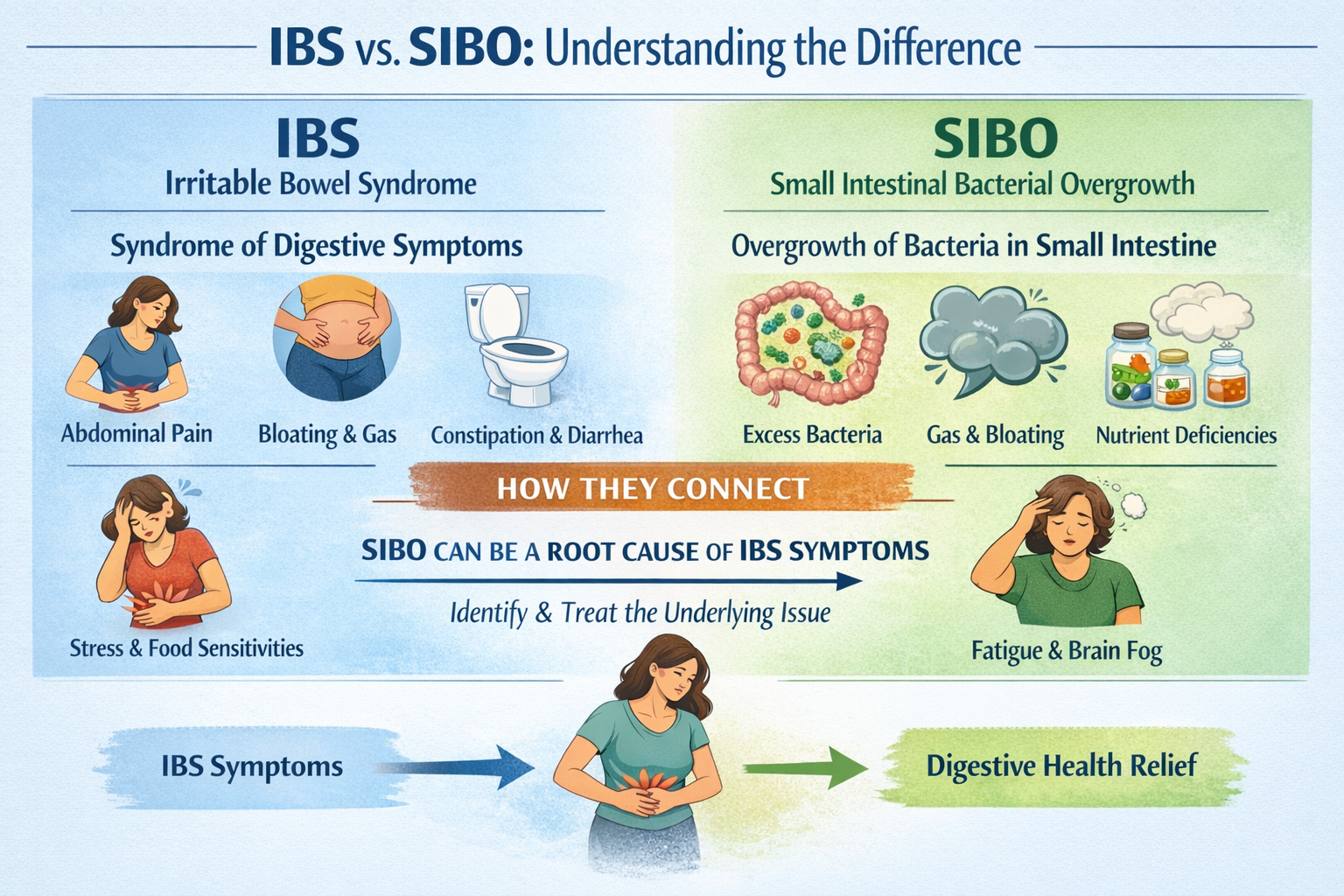
    IBS vs SIBO: What’s the Difference?

    IBS is a diagnosis based on symptoms. SIBO is one possible root cause contributing to those symptoms.

    Research suggests a significant number of IBS patients may have underlying SIBO, especially when bloating is a major complaint.

    This is why identifying the cause of symptoms matters.


    ""
    IBS and SIBO: What is the difference?

    SIBO and IBS Testing Process

    As a naturopathic doctor, I focus on identifying why symptoms developed in the first place.

    Initial Assessment Includes:

    • Digestive symptom history
    • Bowel movement patterns
    • Food triggers
    • Stress levels
    • Sleep quality
    • Medication history
    • Antibiotic use
    • Previous food poisoning or travel illness
    • Hormonal health
    • Thyroid function

    SIBO Breath Testing

    A SIBO breath test is commonly used to detect hydrogen or methane gas patterns after consuming a test solution.

    This can help identify:

    • Hydrogen dominant SIBO
    • Methane dominant SIBO (often linked to constipation)
    • Mixed gas patterns

    Additional Digestive Testing May Include:

    • Iron and B12 levels
    • Vitamin D
    • Thyroid panel
    • Celiac screening
    • Stool testing
    • Inflammatory markers

    If you are searching for SIBO testing near me or IBS testing naturopathic doctor, professional guidance can help determine which tests are appropriate.


    Naturopathic Treatment for SIBO and IBS

    1. Symptom Relief and Gut Calm

    The first step is reducing irritation and improving digestion.

    This may include:

    • Low-FODMAP support
    • Trigger food identification
    • Meal timing strategies
    • Digestive support
    • Stress reduction

    2. Address Bacterial Overgrowth

    Depending on the case, treatment may include:

    • Herbal antimicrobial protocols
    • Prescription treatment through your medical provider
    • Combination approaches
    • Personalized supplement support

    3. Restore Gut Motility

    Preventing relapse often requires improving movement through the digestive tract.

    Support may include:

    • Constipation treatment
    • Prokinetic support
    • Nervous system regulation
    • Stress management
    • Thyroid optimization when indicated

    4. Rebuild Long-Term Gut Health

    Once symptoms improve:

    • Foods are reintroduced strategically
    • Microbiome diversity is supported
    • Nutrient deficiencies are corrected
    • Digestive resilience is rebuilt

    Why SIBO Symptoms Keep Coming Back

    Many people experience relapse because the underlying causes were never fully addressed.

    Common reasons include:

    • Chronic constipation
    • Poor gut motility
    • Ongoing stress
    • Thyroid dysfunction
    • Repeated antibiotics
    • Restrictive diets without repair

    When to See a Naturopathic Doctor for IBS or SIBO

    Consider professional support if you have:

    • Daily bloating
    • IBS diagnosis with no improvement
    • Constipation or diarrhea
    • Food sensitivities
    • Brain fog after meals
    • Gas and abdominal discomfort
    • Symptoms after antibiotics or food poisoning

    If you are searching for a naturopathic doctor for IBS, SIBO treatment naturopath, or digestive health clinic, a personalized plan can make a major difference.


    Final Thoughts

    IBS symptoms are real—but they often have deeper causes. SIBO, stress, poor motility, hormonal imbalances, and digestive dysfunction can all contribute.

    A naturopathic approach aims to uncover those root causes and create a personalized treatment plan so you can eat comfortably, digest better, and feel like yourself again.


    Book a Digestive Health Consultation

    If you are dealing with bloating, IBS, constipation, diarrhea, or suspected SIBO, professional assessment can help you move forward with clarity.

    Looking for SIBO treatment or IBS support? Book an appointment today.

© 2026 Dr. Ryan Nakama ND