Category: General Health

  • Summer Wellness Check-Up

    Summer Wellness Check-Up

    Summer Wellness Check-Up

    A Comprehensive Health Assessment to Help You Feel Your Best This Summer

    Summer is often a season of increased activity, travel, social events, and time outdoors. It can also be a time when underlying health concerns become more noticeable—fatigue, digestive issues, poor recovery, weight changes, sleep disruption, burnout, or feeling like you’re simply not functioning at your best.

    Our Summer Wellness Check-Up is designed to help you better understand your health, identify areas for improvement, and create a practical plan to support your wellbeing over the coming months.

    Whether you are looking to optimize your health, review your lab work, or address symptoms that have been holding you back, this program provides a personalized, evidence-informed approach to preventive healthcare.

    What Is Included?

    Comprehensive Initial Assessment

    Your first visit includes a thorough review of your:

    • Current symptoms and health concerns
    • Medical and family health history
    • Nutrition and digestive health
    • Energy levels and sleep quality
    • Exercise and activity habits
    • Stress and recovery patterns
    • Preventive health goals

    Based on your assessment, we may discuss appropriate laboratory testing to provide additional insight into your health.

    Personalized Follow-Up Visit

    Once your assessment and laboratory information have been reviewed, we will meet again to discuss your results and develop a personalized wellness plan.

    This visit includes:

    • Detailed review of laboratory findings
    • Discussion of key health priorities
    • Personalized nutrition and lifestyle recommendations
    • Supplement recommendations when appropriate
    • A practical 90-day action plan tailored to your goals

    The Six Pillars of Wellness

    Your wellness plan is built around six key areas that influence long-term health and wellbeing.

    1. Metabolic Health & Blood Sugar Balance

    Healthy blood sugar regulation supports:

    • Stable energy
    • Reduced cravings
    • Weight management
    • Long-term cardiovascular health

    2. Digestive Health & Gut Function

    Your digestive system plays an important role in:

    • Nutrient absorption
    • Immune function
    • Energy production
    • Daily comfort and wellbeing

    3. Nutrition Foundations

    Food provides the building blocks for health.

    We focus on practical, sustainable strategies that support:

    • Energy
    • Hormone balance
    • Recovery
    • Healthy aging

    4. Cardiovascular & Inflammatory Health

    Understanding factors such as cholesterol, triglycerides, blood pressure, and inflammation can help support long-term health and prevention.

    5. Energy, Hormones & Healthy Aging

    Many factors can contribute to fatigue, poor recovery, and changes in how we feel as we age.

    We assess areas such as:

    • Sleep quality
    • Iron status
    • Thyroid function
    • Nutrient status
    • Lifestyle factors

    6. Stress Resilience & Nervous System Health

    Stress affects nearly every system in the body.

    Improving resilience and recovery can positively influence:

    • Sleep
    • Digestion
    • Energy
    • Mood
    • Overall wellbeing

    Laboratory Assessment

    Laboratory testing can provide valuable insight into your health and help guide recommendations.

    Depending on your individual needs, testing may include evaluation of:

    • Blood sugar regulation
    • Cholesterol and triglycerides
    • Iron status
    • Thyroid function
    • Inflammation markers
    • Vitamin and nutrient status
    • Liver and kidney function

    Testing recommendations are individualized and discussed during your assessment.

    Your Personalized Wellness Report

    As part of your Summer Wellness Check-Up, you will receive resources designed to help you take action with confidence, including:

    • A personalized wellness summary
    • Lab interpretation and education
    • Nutrition and lifestyle recommendations
    • A 90-day goal-setting worksheet
    • Practical strategies to support long-term success

    Who Is This Program For?

    This program may be a good fit if you:

    • Want a proactive approach to your health
    • Are experiencing fatigue, digestive concerns, or poor recovery
    • Want a deeper understanding of your lab results
    • Are looking for personalized nutrition guidance
    • Want support with healthy aging and disease prevention
    • Are ready to make meaningful changes to your health habits

    Invest in Your Health This Summer

    Small changes can have a significant impact when guided by a clear understanding of your health.

    The Summer Wellness Check-Up provides a structured, personalized approach to help you understand where you are today, identify opportunities for improvement, and create a practical plan for the months ahead.

    Book your Summer Wellness Check-Up today and take the next step toward feeling your best.

  • Fatigue, Stress, or Burnout? Understanding What Your Body May Be Telling You

    Fatigue, Stress, or Burnout? Understanding What Your Body May Be Telling You

    Feeling tired has become so common that many people assume it’s just a normal part of modern life. Busy schedules, family responsibilities, work demands, and constant connectivity can leave us feeling drained. But when fatigue becomes persistent, it may be a sign that your body is asking for attention.

    Not All Fatigue Is the Same

    Occasional tiredness after a late night or a busy week is normal. However, ongoing fatigue that doesn’t improve with rest may indicate an underlying issue. Common contributors include:

    • Chronic stress
    • Poor sleep quality
    • Nutrient deficiencies
    • Blood sugar imbalances
    • Hormonal changes
    • Digestive concerns affecting nutrient absorption
    • Inflammation or chronic illness

    Identifying the root cause is an important first step toward recovery.

    The Impact of Chronic Stress

    Stress is more than a mental or emotional experience—it creates physical changes throughout the body. When stress becomes chronic, it can affect sleep, digestion, energy production, immune function, and mood.

    Common signs of chronic stress include:

    • Difficulty falling or staying asleep
    • Brain fog or poor concentration
    • Increased anxiety or irritability
    • Frequent headaches or muscle tension
    • Digestive symptoms
    • Feeling “wired but tired”

    Over time, these symptoms can significantly affect quality of life and overall health.

    When Stress Becomes Burnout

    Burnout occurs when prolonged stress overwhelms the body’s ability to recover. While often associated with work, burnout can affect parents, caregivers, students, and anyone facing ongoing demands.

    Signs of burnout may include:

    • Persistent exhaustion
    • Loss of motivation
    • Feeling detached or emotionally numb
    • Reduced productivity
    • Increased susceptibility to illness
    • Difficulty coping with everyday tasks

    Burnout isn’t a sign of weakness—it’s often a signal that your body and mind have been operating beyond their capacity for too long.

    A Naturopathic Approach

    Naturopathic medicine takes a comprehensive approach to fatigue, stress, and burnout. Rather than simply masking symptoms, we look for underlying factors that may be contributing to low energy and poor resilience.

    This may include evaluating:

    • Sleep quality and recovery
    • Nutritional status
    • Blood sugar regulation
    • Hormonal health
    • Digestive function
    • Lifestyle and stress management factors

    Treatment plans are individualized and may include nutrition strategies, targeted supplementation, stress-management techniques, sleep optimization, and lifestyle recommendations designed to support long-term recovery.

    When to Seek Help

    If you’re feeling exhausted despite getting adequate sleep, relying on caffeine to get through the day, or finding that stress is affecting your daily functioning, it may be time to investigate further.

    Fatigue is not always something you simply have to “push through.” Understanding the underlying causes can help you regain energy, improve resilience, and support your overall health and well-being.

    If you’re struggling with fatigue, stress, or burnout, consider booking an appointment to explore what may be contributing to your symptoms and develop a personalized plan to help you feel your best.

  • Iron: More Than Just a Number on a Lab Test

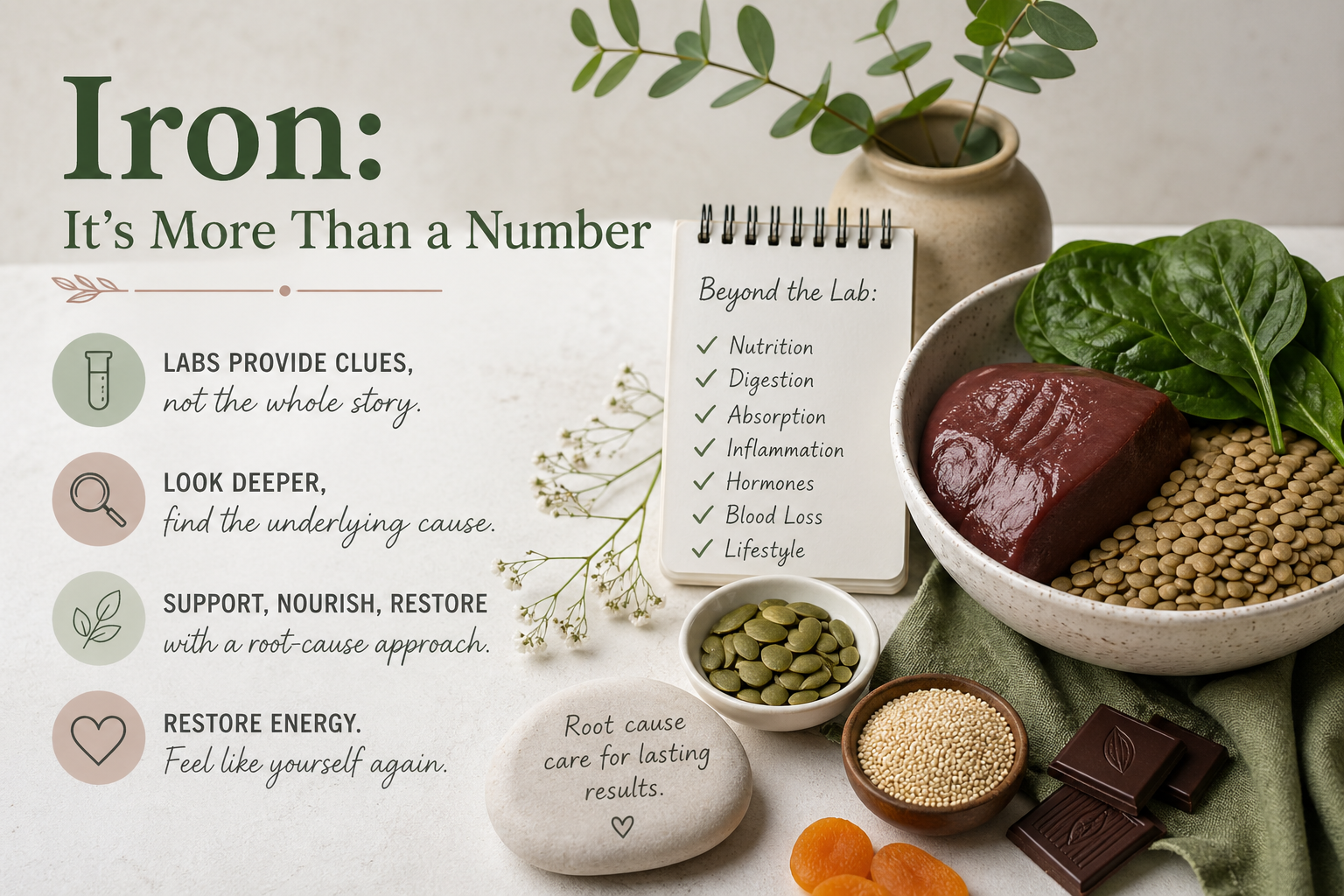
    Iron: More Than Just a Number on a Lab Test

    Fatigue, hair loss, shortness of breath, headaches, poor exercise tolerance, restless legs, brain fog, and feeling cold all the time can sometimes point toward low iron—even when hemoglobin is still “normal.” Iron is essential for oxygen delivery, energy production, thyroid function, immune health, cognition, and healthy hair, skin, and nails. When iron stores are low, the body often lets you know.

    Lab testing is important—but it has limitations.
    Many people are told their iron is “fine” based on a basic CBC or serum iron level, but iron status is more complex than that. A more complete picture may include markers such as ferritin (iron storage), transferrin saturation, TIBC, hemoglobin, MCV, and sometimes inflammatory markers like CRP, since inflammation can falsely elevate ferritin and mask deficiency. At the same time, lab ranges reflect broad population averages—not always what is optimal for how you feel clinically.

    However, simply taking iron isn’t always the answer.

    The bigger question is: why is iron low in the first place?
    Low iron can be a symptom of an underlying issue such as:

    • Heavy menstrual bleeding
    • Low stomach acid or poor digestion affecting absorption
    • Celiac disease or gut inflammation
    • H. pylori infection
    • Frequent blood donation
    • Pregnancy or increased athletic demands
    • Vegetarian/vegan diets without careful iron planning
    • Chronic inflammation
    • Occult gastrointestinal blood loss

    In naturopathic medicine, the goal is not just to correct the number—but to understand the root cause. That may mean supporting digestion, addressing gut health, improving nutrient absorption, reducing inflammation, or investigating hidden blood loss—while using targeted iron supplementation when appropriate.

    Iron deserves a deeper look than “normal” or “low.”
    The right testing, proper interpretation, and a root-cause approach can make all the difference in restoring energy, resilience, and overall health.

    Book an appointment today to get the whole picture.

    Dr. Ryan Nakama proudly provides Naturopathic Medicine Services to Lethbridge and Southern Alberta.

  • “My Labs Are Normal”… So Why Do I Still Feel Unwell?

    “My Labs Are Normal”… So Why Do I Still Feel Unwell?

    You’ve been tired for months.

    Your digestion is off.
    You’re gaining weight more easily.
    Your sleep feels lighter, less restorative.
    You feel anxious, irritable, foggy, inflamed—or simply not like yourself.

    So you do what you’re supposed to do: you book an appointment, run bloodwork, and wait for answers.

    Then the results come back:

    “Everything looks normal.”

    And yet—you still feel awful.

    If this sounds familiar, you are not alone.

    As a naturopathic doctor, one of the most common things I hear from patients is:

    “I know something is off, but my doctor says my labs are normal.”

    Here’s what that often means—and why your symptoms still deserve attention.

    “Normal” Doesn’t Always Mean “Optimal”

    Laboratory reference ranges are designed to identify disease, not necessarily early dysfunction.

    In other words:

    • You may not have anemia—but your iron stores may be too low for healthy energy.
    • Your thyroid may be “within range”—but not functioning optimally for your body.
    • Your blood sugar may be technically normal—while insulin resistance is quietly developing.
    • Your inflammation markers may be acceptable—while low-grade inflammation is contributing to fatigue, pain, or hormone imbalance.

    Many chronic symptoms begin years before disease appears on standard lab testing.

    This is where naturopathic medicine takes a deeper look.

    Symptoms Are Data

    Your body is always communicating.

    Symptoms like:

    …are not random.

    They are clues.

    They may point toward:

    When we listen closely, symptoms often tell a story long before conventional testing catches up.

    Functional Imbalance Can Exist Before Disease

    Think of health like a spectrum:

    Optimal health → mild imbalance → dysfunction → disease

    Conventional medicine is excellent at diagnosing disease.

    Naturopathic medicine often works in the earlier stages—when dysfunction is present, but before it becomes a diagnosis.

    That matters, because this is often the best time to intervene.

    A Deeper Assessment Can Change Everything

    A naturopathic assessment may explore:

    Your history

    Not just what symptoms you have—but:

    • when they started
    • what triggers them
    • what makes them better or worse
    • sleep patterns
    • digestion
    • stress load
    • hormones
    • medications
    • nutrition
    • environmental exposures

    A deeper lab interpretation

    Sometimes the issue is not abnormal labs—it’s patterns hidden within “normal” labs.

    For example:

    • ferritin in the low-normal range
    • borderline B12
    • elevated fasting insulin
    • subtle thyroid patterns
    • inflammation trends
    • nutrient deficiencies
    • liver or bile flow issues
    • immune markers that suggest ongoing activation

    Root-cause investigation

    Depending on symptoms, this may include looking deeper at:

    • gut health
    • hormones
    • metabolic health
    • nutrient status
    • inflammation
    • cortisol rhythm / stress response
    • food reactions
    • environmental contributors

    You Know Your Body

    If you feel unwell, exhausted, inflamed, foggy, or unlike yourself—even with “normal” labs—your experience is valid.

    Your symptoms are worth investigating.

    Normal bloodwork should be reassuring—but it should not automatically end the conversation.

    Sometimes it’s simply the beginning of asking better questions.

    Final Thoughts

    You deserve more than:

    “Your labs are normal.”

    You deserve to understand why you feel the way you do—and what can be done to help.

    Healing often starts when someone finally listens closely enough.


    If you’ve been told everything looks normal, but you still don’t feel well, there may be more to explore. A thorough naturopathic assessment can help uncover the patterns behind your symptoms and create a plan that supports true healing—not just normal lab values.

    Dr. Ryan Nakama ND proudly provides Naturopathic Medicine services to Lethbridge and Southern Alberta.

© 2026 Dr. Ryan Nakama ND